Before branded by existed, Evan and I were both marketing directors at the same company, a residential concrete business with more than 30 locations, over 100 employees not counting subcontractors, and millions of dollars a month in revenue. We'd just brought website work in house after years with an outside agency, and someone had to decide what to build it on.
The Debate That Decided It
I came from an agency background that was one hundred percent WordPress. That's what I knew. Evan had dabbled in WordPress too, but he was the one who said there's this new tool called Webflow, we should look at it. Another director on the team, who owned the website day to day, wanted to stay on WordPress. It turned into a real debate, and I ended up in the middle of it, trying to get everyone to agree on a direction.
A colleague named Adam is the one who finally convinced us Webflow was the future.
What Actually Tipped the Scales
The debate wasn't philosophical. It came down to what our team was dealing with every week on the WordPress site: a plugin update breaking a page layout, a developer needed for changes that should've taken five minutes, and a growing list of security patches to stay on top of across dozens of location pages. That's not a knock on WordPress in general, it's a "WordPress at this scale, run by a lean internal team" problem. WordPress still powers somewhere around a third to 40% of all websites, and for a lot of businesses it's the right call. Ours just wasn't one of them.
Here's the comparison as we actually lived it, not the marketing-page version:
- Plugins and maintenance. WordPress leans on plugins for most real functionality: forms, SEO, security, page builders. Every plugin is a separate piece of software that needs updates, and plugin conflicts are one of the most common reasons a WordPress site breaks. Webflow's core functionality is built in, so there's no plugin stack to babysit.
- Hosting and security. WordPress requires choosing, configuring, and securing your own hosting, including SSL and firewalls, or paying extra for managed hosting that does it for you. Webflow hosting, SSL, and CDN come with the platform.
- Design-to-development handoff. WordPress typically separates design from development: someone designs in Figma, then a developer builds it into a theme. That handoff is where scope and timelines usually slip. Webflow's visual editor is the design tool and the live build at the same time.
- Editing for non-developers. How safely a non-technical teammate can update a WordPress page depends entirely on which editor or page-builder plugin is installed. Webflow's CMS is built for structured content, so editors can update text and images without touching the design.
- Ownership. WordPress is open-source. You own your code and can move hosts whenever you want. Webflow is a closed platform, so migrating off it later takes more work. That's a real tradeoff, not a small one, and it's worth going in with eyes open.
None of that makes Webflow objectively better for every business. It made it better for a team that needed to move fast without a full-time developer on call, which described us then and describes most of our clients now.
Why We've Stuck With It
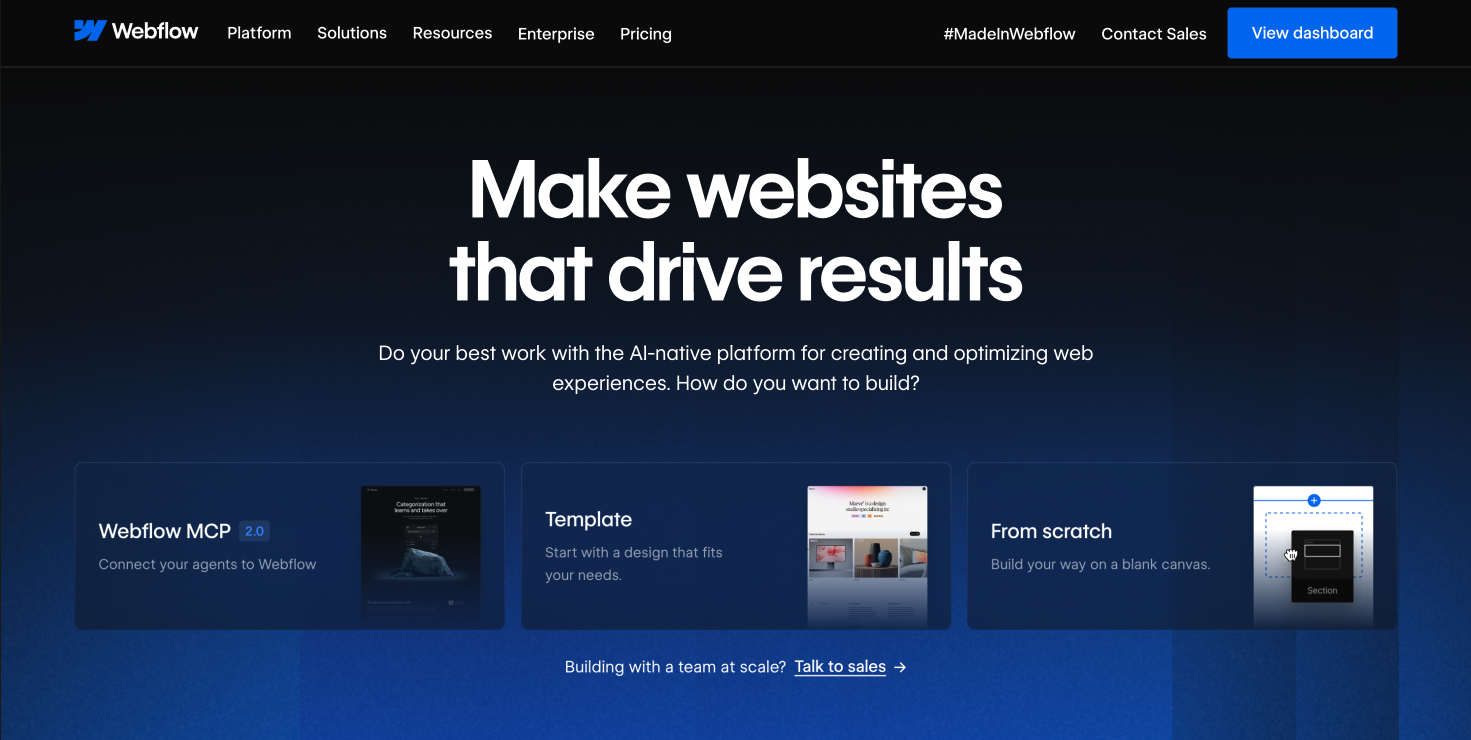
Not long after, Evan and I left to start branded by full time, and we went Webflow first from day one. We've stuck with it ever since, including a trip to a Webflow conference in New York City a couple years ago where we picked up ideas we're still using on client sites today, from how we structure CMS collections to how we handle interactions and animations without bloating page load times. We've since built and launched dozens of client sites on the platform, ranging from single-location service businesses to companies with locations spread across several states.
We didn't choose Webflow because it was trendy. We chose it because we watched a genuine debate play out inside a real company and picked the side that held up, and every year since has given us more reasons to stay: faster builds for clients, a CMS their own teams can manage without calling us for every text change, and a platform that keeps up as a client's business grows instead of accumulating plugin debt.
Where You Can See It
This isn't a preference we hold onto out of habit. It's what we build nearly every client site on, across very different kinds of businesses:
Same platform, same reasons, whether the client is a two-truck local business or a company answering to shareholders.
Frequently Asked Questions
What's the actual difference between Webflow and WordPress?
WordPress is open-source software you install on hosting you manage yourself, and most of its functionality comes from third-party plugins. Webflow is an all-in-one platform, design tool, CMS, and hosting bundled together, with the core features built in rather than added through plugins.
Is Webflow better for SEO than WordPress?
Both can rank well when built correctly. Webflow's built-in speed, hosting, and clean code give it a technical SEO advantage out of the box. WordPress can match that, but it takes the right host, the right theme, and usually an SEO plugin configured correctly, which is more moving parts to get right and keep right.
Do you need to know how to code to use Webflow?
No. You can design, build, and publish a full site in Webflow without writing code. Front-end knowledge helps for custom interactions or complex logic, but it's not required to launch a professional site.
Is Webflow more expensive than WordPress?
WordPress the software is free, but the real cost is hosting, premium plugins, a theme, and often a developer to keep it running. Webflow bundles hosting, SSL, and a CDN into one plan, so the total cost of running the site is often more predictable, even when the sticker price looks higher upfront.
How long does it take to launch a website on Webflow compared to WordPress?
Timelines vary by scope, but Webflow builds tend to move faster once a design is approved, because there's no separate phase to build a custom theme from scratch or test plugin compatibility before launch. A comparable WordPress build usually needs extra time for theme development, plugin configuration, and QA across whatever combination of plugins the site ends up running.
Can you migrate an existing WordPress site to Webflow?
Yes. It's a common starting point for new clients moving off an aging WordPress build.
Why does branded by build client websites on Webflow instead of WordPress?
We made the switch after watching a real internal debate play out at a 30+ location company where we both worked before starting branded by. Webflow won on its own merits, faster builds, fewer plugin dependencies, and a visual editor that keeps design and development tightly connected, not because it was the newer option.
Does branded by ever build on WordPress?
Our default is Webflow for the reasons above, but the right platform depends on a client's existing systems and technical needs. We'll talk through the tradeoffs on a discovery call.
The Bottom Line
If you're deciding on a platform for your next site, what's actually driving that decision: familiarity, or what the site needs to do?
Talk to us about your next website.