There's a new visitor type on your website that most analytics dashboards don't properly segment: the AI-referred visitor.
This person has already had a conversation with ChatGPT, Perplexity, or a similar tool. They asked a specific question. The AI named your brand as a source or recommendation. They then searched for you directly or clicked a citation link. By the time they hit your landing page, they've already been told, by an AI, that you're worth looking at.
This visitor converts differently than someone who found you through a keyword search. Understanding the difference is how you optimize for the channel.
Key takeaways
- AI-referred visitors arrive already told you're worth a look; they come to verify, not to discover.
- Specific, third-party proof confirms the AI was right about you.
- Make the direct CTA prominent and visible above the fold on desktop and mobile.
- Many arrive on mobile, so fast loads and tappable CTAs decide whether they convert.
What AI-Referred Visitors Already Know
The AI already gave them context. It summarized who you are, what you do, and why you were mentioned. They didn't arrive at your page to find out what you are — they arrived to verify that what the AI said is accurate and to decide whether to act.
This has concrete implications for landing page structure. Content that exists to explain your basic value proposition — who you are, what problem you solve, why anyone should care — is less necessary for this visitor than for a cold organic visitor. What they need is verification: proof that you are what the AI implied, and a clear path to taking the next step.
The Verification Layer
The most important addition to a landing page designed for AI-referred traffic is trust verification — specific, third-party signals that confirm the AI's description of you.
This looks different from generic social proof. "Join 10,000 customers" is generic. "Trusted by over 300 B2B SaaS companies for pipeline management" is specific and verifiable. Named customer logos from recognizable companies are verification. A specific case study number ("42% reduction in sales cycle length for a 200-person software company") is verification. An authoritative press mention is verification.
The goal is to confirm, concisely, that the AI was right about you. AI-referred visitors are already inclined to act — you built that inclination by being cited. Don't let the verification layer be the obstacle.
Reducing the Research Load
Traditional conversion optimization wisdom says: give people less information and more CTA. For AI-referred visitors, the calculus is slightly different. These visitors are sophisticated. They did research before arriving. They're likely to appreciate depth and specificity over reduction.
This doesn't mean long pages with dense paragraphs. It means structured, specific information: exact pricing or price ranges rather than "contact for a quote," specific deliverables rather than vague categories, specific timelines rather than "we'll get back to you." Specificity is itself a trust signal for high-information visitors.
FAQ sections perform particularly well with AI-referred traffic. These visitors often have specific questions the AI didn't fully answer, and a well-structured FAQ gives them the answers they need to convert without requiring a sales call.
The CTA Architecture for AI Traffic
AI-referred visitors are typically further along in their decision process than cold organic visitors. The CTA architecture on your landing page should reflect this.
For cold organic visitors, a two-step CTA is often appropriate: a softer offer (download, free resource, newsletter) for people who aren't ready to buy, and a direct contact or purchase CTA for those who are. For AI-referred visitors, the direct CTA should be more prominent. These people were specifically directed to you. They're not browsing — they're evaluating.
The direct CTA should be specific about what happens next. "Schedule a consultation" is better than "Contact us." "Start your free trial" is better than "Learn more." The more specific the CTA, the less cognitive work the visitor has to do — and the higher the conversion rate.
Vague
- "Contact for a quote"
- Vague service categories
- "We'll get back to you"
- "Contact us" or "Learn more"
Specific
- Exact pricing or price ranges
- Specific deliverables
- Specific timelines
- "Schedule a consultation" or "Start your free trial"
Content Depth vs. Content Density for AI Visitors
There's a distinction worth drawing between content depth and content density. Depth means the page covers the topic completely — addressing the questions a serious buyer would have, covering objections, providing specifics about how you work. Density means packing a lot of information into a small space in ways that make it harder to read.
AI-referred visitors want depth. They don't want density. The ideal landing page for this traffic type is thorough but well-structured — using headers, short paragraphs, and visual breaks to make dense information scannable. A visitor who can quickly find the specific answer they're looking for (pricing, timeline, deliverables, case study) is a visitor who has one fewer reason to leave without converting.
The practical implication: don't hide your most important specifics in long paragraphs. Surface them visually. Use callout boxes for pricing ranges, feature lists for service inclusions, pull quotes for specific client outcomes. Structure the page so a visitor can scan it in 30 seconds and know whether what you offer matches what they're looking for — and then read deeper on the sections that matter most to them.
The Above-the-Fold Priority for High-Intent Traffic
For cold visitors, above-the-fold content often focuses on awareness: a compelling headline, a striking image, a summary of what makes you different. For AI-referred high-intent visitors, the above-the-fold priority is different: confirm the match between what the AI said about you and what you actually offer, and provide an immediate path to action.
This means your headline should be specific, not aspirational. "Brand strategy and web design for growth-stage companies" is more useful for a high-intent visitor than "Build a brand that stands out." The aspiration is understood — they found you through a research process. What they need is confirmation that you serve their specific situation.
It also means your primary CTA should be visible above the fold without scrolling on both desktop and mobile. The single most common conversion failure on landing pages for high-intent visitors is a CTA that's buried below significant content.
Cold visitor vs. AI-referred visitor
| Area | Cold organic visitor | AI-referred visitor |
|---|
| What they need | An explanation of your value | Verification of what the AI said |
| Headline | Aspirational | Specific to who you serve |
| Above the fold | Awareness and what makes you different | Confirm the match, then a path to act |
| CTA | Two-step, with a softer offer | A prominent direct CTA |
How to Test and Iterate Landing Pages for AI Traffic
Testing landing pages for AI-referred visitors requires a slightly different approach than traditional A/B testing, because this traffic segment is often too small to generate statistically significant results quickly. The solution is qualitative testing layered with quantitative monitoring.
Qualitative testing means actually simulating the AI-referred journey: ask a question in ChatGPT or Perplexity that would lead to your brand being cited, click through to your landing page as a first-time visitor, and evaluate the experience honestly. Does the page immediately confirm what the AI said about you? Is the next step obvious? Are there friction points that would cause you to leave before converting?
Quantitative monitoring means tracking the direct traffic and referral segments in your analytics that correspond to AI-referred visits, and watching conversion rates in those segments specifically. When you make changes to the landing page, look for shifts in those segments' conversion rates over a 4–6 week window.
Mobile Experience for AI-Referred Visitors
A disproportionate share of AI-referred traffic arrives on mobile. People using ChatGPT on their phones, getting a recommendation, and clicking through to a website are a growing and significant segment of mobile visitors. The implication: your landing page's mobile experience needs to be at least as good as the desktop experience, and in many cases better.
The most common mobile failures on landing pages are slow load times (images not optimized for mobile), CTAs that are too small to tap comfortably, and content that's been designed for desktop and reflowed badly on smaller screens. Fix these three issues and you capture the significant share of AI-referred visitors who are arriving on mobile with real intent and leaving frustrated.
The benchmark for mobile performance: your above-the-fold content should be visible and your primary CTA should be tappable within 2 seconds of the page loading. Test this yourself on your actual phone on a mobile data connection, not on a fast WiFi network.
Page Speed as a Conversion Factor for High-Intent Traffic
Page load speed affects all visitors, but its impact is amplified for high-intent visitors who arrived with a specific purpose. An AI-referred visitor who specifically navigated to your site after a research session has real intent. Making them wait for a slow page to load is a conversion failure that costs you a qualified prospect.
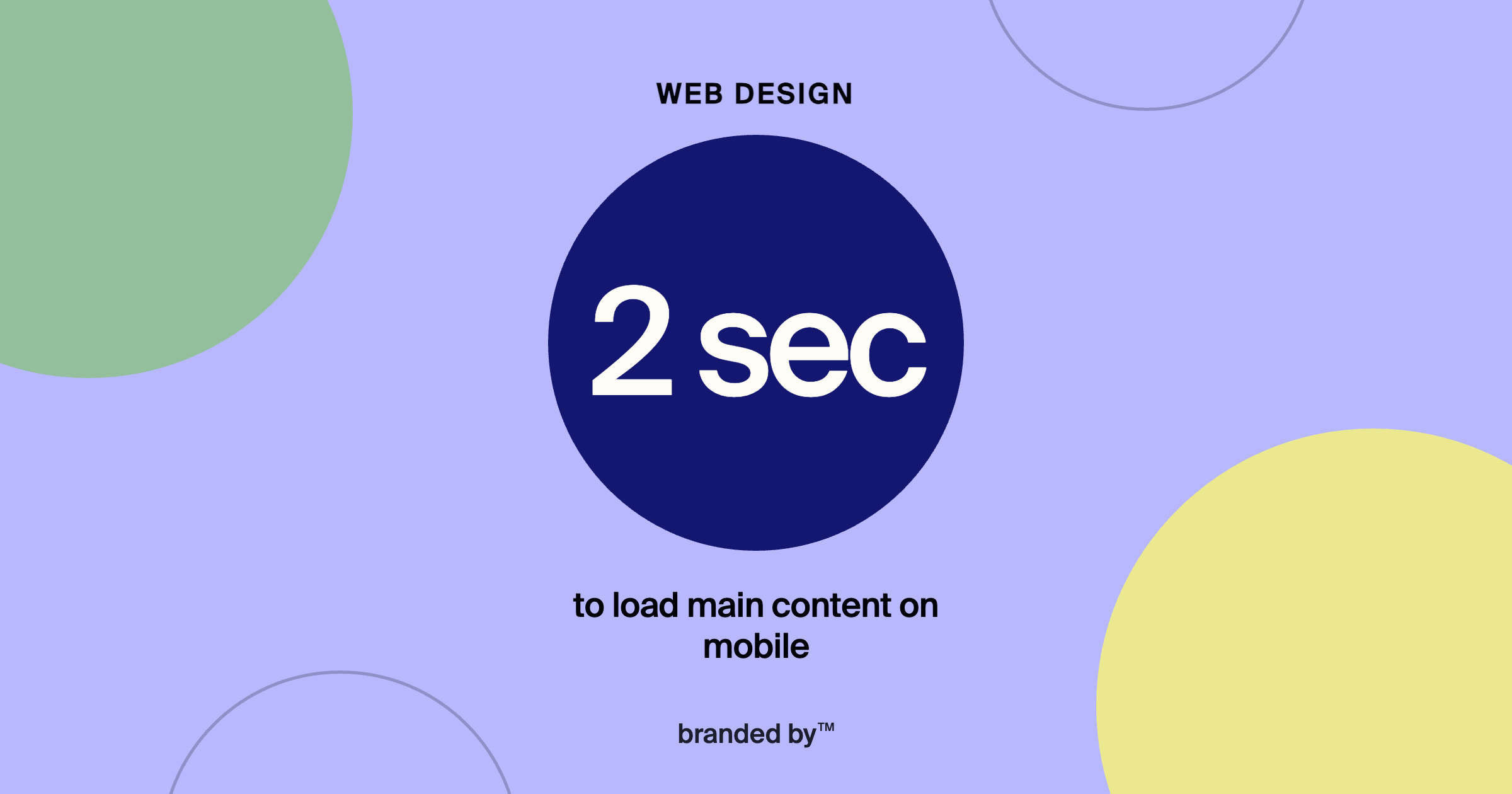
The practical benchmark: your landing pages for AI-referred traffic should load the main content in under 2 seconds on mobile. Test with Google PageSpeed Insights and address the highest-impact issues first. Images are usually the biggest problem — compress them and serve them in modern formats (WebP, AVIF). Defer JavaScript that isn't needed for the above-the-fold experience.
2 secto load main content on mobile
30 secfor a visitor to scan the page
4–6 weeksto watch conversion shifts after changes
Tracking AI-Referred Visitors in Your Analytics
Most analytics setups don't segment AI-referred traffic clearly. Direct traffic is a catch-all that hides a lot of valuable signal. AI-referred visitors who typed your URL directly after a ChatGPT conversation look the same as someone who typed your URL from memory — but they're very different visitors with very different conversion potential.
To segment them properly: set up UTM parameters on any citations where you have control. Monitor your direct traffic segment for changes that correlate with AI search volume growth. Look at new-visitor-to-conversion rates separately from returning visitors — AI-referred visitors are often first-time visitors with high conversion intent, and that signal is worth tracking separately.
Over time, as the AI-referred traffic segment grows, having clean data on its behavior will let you optimize specifically for it. That optimization compounds: better landing pages for these visitors improve conversion rates, which improves the business case for investing in the AEO work that generates those citations in the first place.
Sending AI-referred visitors to a page that isn't converting? The free landing page teardown is a recorded walkthrough with the fixes in order.
Frequently Asked Questions
How is AI search traffic different from Google traffic?
Visitors from AI tools have usually already compared options and read a summary of you, so they arrive further along in their decision and want quick confirmation, not an introduction.
How do I track visitors from ChatGPT and AI search?
Segment referral traffic from AI sources (such as chatgpt.com, perplexity.ai, and gemini.google.com) in your analytics, and ask "how did you hear about us" on forms and calls to capture what analytics misses.
What should a landing page for AI traffic include?
Proof that confirms what the AI said about you — reviews, credentials, pricing clarity — plus a clear, low-friction next step above the fold.
Related Articles