September 29, 2026
How a Local Business Becomes the Name Everyone Knows
Ask anyone in your town who to call for a new roof and most will say the same name. Here's how a local business becomes that name, and why there's no shortcut.
Here's a test: go to your website, then your LinkedIn, then your Instagram, then check the email footer from your last newsletter. Do they look like they came from the same company? Use the same colors, the same tone, the same logo treatment?
Most small and mid-sized businesses fail this test. Not because of bad design, but because each channel got built at a different time by different people with different briefs and no unified standards to reference. The result is a brand that looks vaguely familiar rather than immediately recognizable — and the difference between those two things is real money.
Key takeaways
Brand consistency online means your audience encounters the same visual identity, the same voice, and the same positioning message everywhere they interact with you — website, social profiles, email, ads, even customer support. When all of these align, recognition compounds. Users see your content multiple times across multiple channels, and each exposure reinforces the same impression rather than creating confusion about which version of you is real.
The three dimensions that need to align: visual identity (logo, colors, typography, imagery style), verbal identity (tone of voice, messaging pillars, how you describe what you do), and experiential identity (the feeling customers get when they interact with you, from UX to customer service).
Most businesses have some version of visual consistency. Verbal consistency — sounding the same whether you're writing a product page, a social caption, or a support email — is much rarer, and it may actually matter more for long-term brand building.
The three dimensions that need to align
| Dimension | What it covers |
|---|---|
| Visual identity | Logo, colors, typography, imagery style |
| Verbal identity | Tone of voice, messaging pillars, how you describe what you do |
| Experiential identity | How it feels to interact with you, from UX to customer service |
Two forces have amplified the value of brand consistency in the last few years.
First, the fragmentation of digital channels. Your audience encounters your brand across more surfaces than ever: search, social, email, YouTube, AI search summaries, review platforms. Each touchpoint is a chance to reinforce your brand or to undermine it. Inconsistency at any of these points creates what designers call cognitive dissonance — a subtle friction where the user pauses and wonders which version of you is real.
Second, AI search. When ChatGPT or Gemini tries to summarize who your brand is and what it does, it aggregates signals from across the web. If your website describes you one way, your LinkedIn describes you differently, and your Google Business Profile is a third variation, AI systems see a fragmented entity rather than a clear one. This affects whether AI recommends you and how it describes you when it does.
The data on brand consistency is consistent: companies maintaining uniform brand presentation across channels see revenue increases that significantly outpace competitors with inconsistent presentation. The mechanism is simple — recognition reduces decision fatigue. When a potential customer sees your brand across multiple touchpoints and gets the same impression every time, the trust builds without conscious effort. The brand becomes familiar. Familiar becomes trusted. Trusted becomes purchased.
There's also a compounding effect on customer lifetime value. A customer who has a coherent, consistent experience of your brand at every stage — pre-sale, during the relationship, post-purchase — is more likely to come back and more likely to refer others. Inconsistency introduces doubt. Doubt introduces friction. Friction reduces renewal and referral rates.
Knowing what breaks down most often makes it easier to audit your own brand and prioritize fixes.
Logo misuse. The logo gets stretched, recolored, or placed on a background that reduces legibility. Often it's a different version — a legacy design that wasn't updated when the brand was refreshed — being used somewhere that nobody thought to check.
Color drift. The brand colors on the website are slightly different from the brand colors in the social media templates, which are different again from the email design. This usually happens because hex codes weren't locked down in a central asset document and different designers recreated them from memory or screenshots.
Tone inconsistency. The website copy is formal and professional. The Instagram captions are casual and emoji-heavy. The email newsletters read like a different brand entirely. Each channel was given to someone different without a unified voice guide, and the result is a brand that sounds like multiple people rather than one coherent entity.
Typography sprawl. Headline fonts that were part of a rebrand got applied to new materials, but old materials were never updated. Now your newer touchpoints look different from your older ones, and the brand feels like it's in two eras at once.
Outdated assets on secondary platforms. The website got updated. The newsletter templates got updated. But the YouTube channel banner, the LinkedIn cover image, the email signature, and the sales deck are still running the old brand. Secondary touchpoints are often where inconsistency hides longest because nobody owns them clearly.
Most brand guidelines fail not because they're wrong but because they're too long and too abstract to be useful in practice. The creative team doesn't open a 60-page PDF when they need to write a caption. They work from memory, and inconsistency follows.
A brand standards document that actually gets used has three qualities: it's short enough to read in 15 minutes, it shows rather than tells (examples of correct and incorrect usage, not just descriptions), and it lives somewhere everyone can access immediately — not buried in a shared drive folder from 2021.
The minimum viable version contains: your logo files in every approved format, your exact brand colors as hex/RGB/CMYK values, your approved typefaces with usage guidelines, two or three examples of your brand voice with do/don't comparisons, and your brand photography style with reference images. Everything else is optional. If those five elements are clear and accessible, most consistency problems solve themselves.
A brand standards document is a reference. A system is what makes consistency happen automatically, without anyone having to remember to check the document. The difference between organizations with durable brand consistency and those that drift back into inconsistency is usually the presence or absence of systems.
The most effective system is a shared asset library that lives in a tool everyone already uses — Google Drive, Notion, Figma, or a purpose-built DAM platform. Every approved logo file, every brand color swatch, every approved font, every photography template lives in one place with a clear naming convention. When someone needs to create something branded, the assets are right there, already correct.
The second system is a template library for recurring content types: social media post templates, email header templates, presentation slide decks, proposal documents. Templates don't just save time — they make the brand-consistent option the path of least resistance. When someone can choose between starting from a blank document or opening a pre-built template that already matches the brand, most people choose the template. Consistency follows.
The third system is a lightweight review step for customer-facing materials. Not every piece of content needs design review, but anything going to a significant audience — a campaign landing page, a sales deck for a major prospect, an email going to the full list — benefits from a 10-minute consistency check before it goes out. Building that step into the workflow, rather than relying on individual initiative, is what catches the drift before it compounds.
One of the least-discussed causes of brand inconsistency is what happens when ownership of a channel or content type changes hands. A social media manager who built the brand's Instagram presence leaves, and their replacement doesn't have clear documentation of the visual style, caption tone, or content categories that made the channel work. Within a few months, the Instagram looks subtly different.
This is the internal handoff problem, and it's endemic in organizations where brand guidelines live in people's heads rather than in documented systems. The solution isn't to prevent turnover. It's to document the decisions that currently live in people's heads before those people leave.
A simple channel brief for each platform — covering visual style, tone of voice, content categories, posting cadence, and two or three examples of high-performing posts — takes a few hours to create and eliminates most of the drift risk during transitions.
Most brand consistency discussions focus on organic content — website, social, email. Paid advertising is often overlooked, and the inconsistency there can be significant. An ad that looks visually different from the landing page it leads to creates a discontinuity that increases bounce rates and reduces conversion. The visitor arrived from an ad that promised one experience and landed on a page that delivered a different one.
The fix is simple but requires intentional coordination: paid creative should be designed as an extension of the landing page experience, not as a separate creative exercise. The visual treatment, headline style, and value proposition framing in the ad should match what the visitor finds when they click.
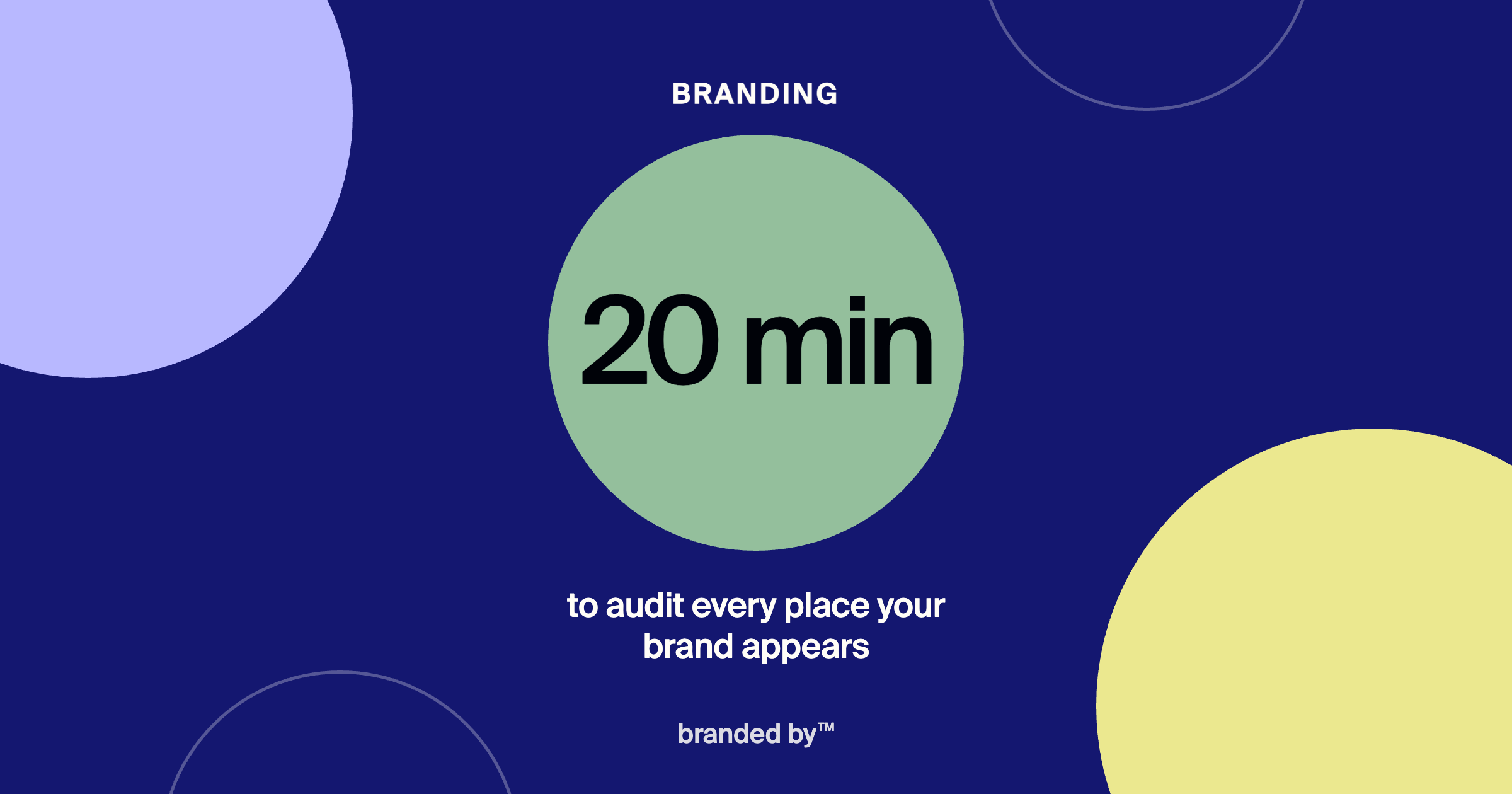
The fastest audit: spend 20 minutes visiting every place your brand appears online as if you're a new customer who's never seen you before. Open each one in a separate tab. Then look at them all at once. Ask yourself: do these look like they belong to the same company? Do they sound like the same person wrote them? If the answer is no in either case, you've found your starting point.
Start with the highest-traffic touchpoints. Your website and Google Business Profile are typically the most important. Then your most active social channels. Then email. Secondary channels can follow once the primary ones are aligned.
There's a new dimension to brand consistency that didn't exist five years ago: how your brand is described by AI systems. When someone asks ChatGPT who you are or what you do, the answer comes from an aggregation of everything the AI has read about you across the web. Inconsistent positioning across platforms produces inconsistent AI descriptions — sometimes vague, sometimes subtly wrong, occasionally actively misleading.
The fix is the same as the fix for human-facing consistency: unify your brand description across every platform. Your website's about page, your LinkedIn company description, your Google Business Profile, your press releases, your media mentions — all of them should describe your brand in the same way, using the same core language and the same positioning.
When AI systems encounter consistent entity signals across multiple authoritative sources, they build a clearer, more accurate picture of your brand. That picture is what gets reproduced when someone asks who you are. Getting this right is one of the most underinvested activities in brand management right now, and one of the highest-return ones.
Brand consistency means your brand looks, sounds, and behaves the same across every channel — website, social, email, ads, and in person — so people recognize and trust it faster.
Line up your website, social profiles, email templates, ads, and business listings side by side, and check logo use, colors, typography, tone, and business information against your brand standards.
AI tools cross-check information about your brand across the web. Consistent names, descriptions, and details make it easier for them to recognize and recommend you.