In traditional SEO, the game was mostly on your own site: your keywords, your structure, your content. You had significant control over the signals that determined whether you ranked.
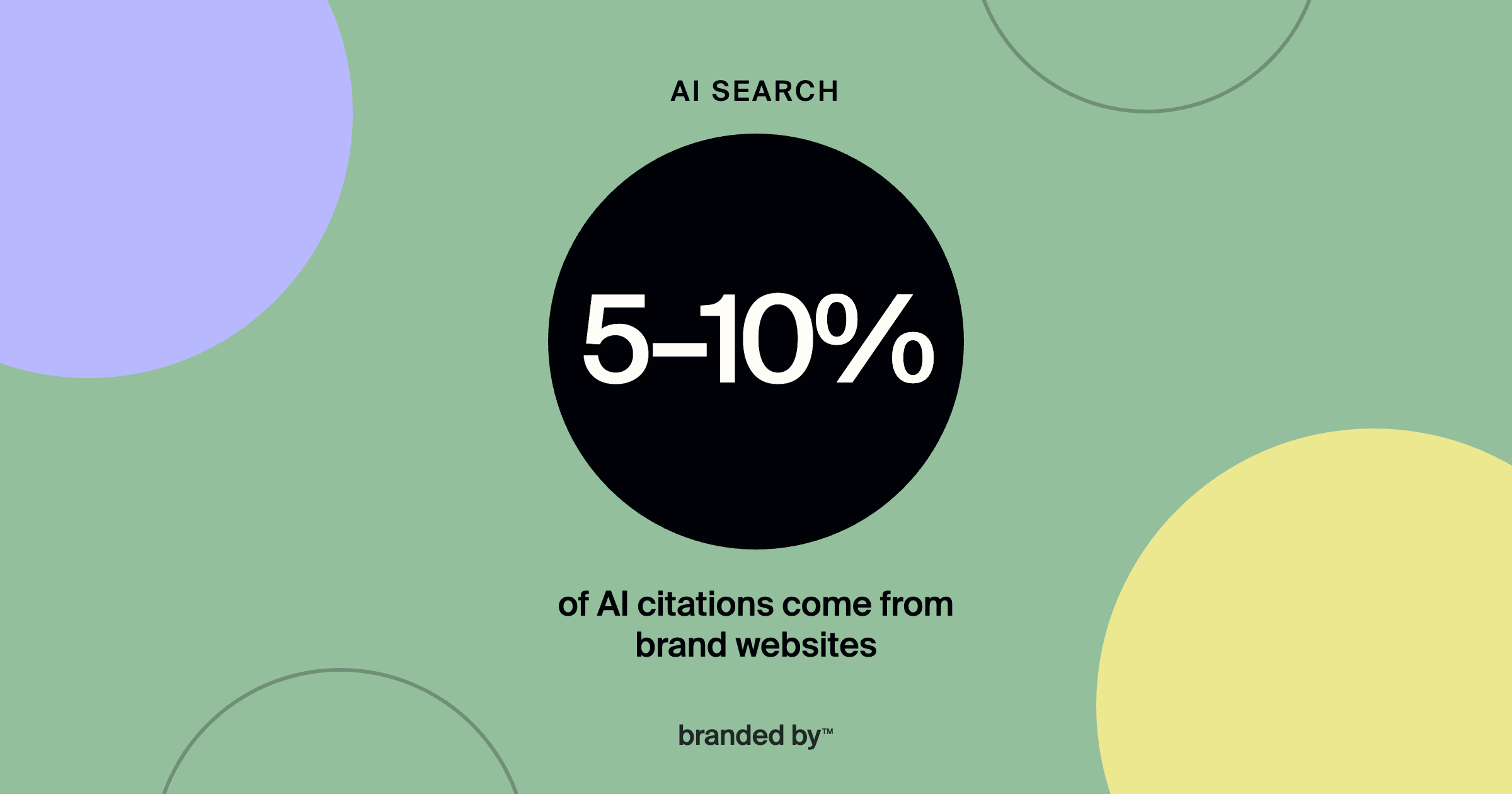
In AI search, your own site is just one input. What matters equally — and in some cases more — is what the rest of the web says about you. When ChatGPT or Perplexity synthesizes an answer about who's best in your category, they're aggregating signals from authoritative publications, brand mentions across the web, review platforms, forums, and social media. Your website is your self-description. The rest of the web is your reputation.
These are different things, and both matter.
Key takeaways
- In AI search your website is your self-description; the rest of the web is your reputation.
- Authoritative placements built on your own data become citation magnets.
- AI reads unlinked mentions too, and learns what your brand is associated with.
- Use one canonical brand name everywhere so every signal adds up to one entity.
Digital PR: Giving AI Something to Cite
Think of large language models as researchers who've read everything published on the internet. When they form an opinion about your brand, it's based on what they've read from sources they trust. Your homepage is one source. Forbes, an industry trade publication, a respected local news site — these are different sources with different authority weights.
When your brand is featured in a high-quality external publication, you're not just earning a backlink. You're contributing structured, contextualized information about who you are and what you do from a trusted third-party perspective. AI systems weight this heavily, because third-party mentions are harder to manufacture than self-reported claims.
The highest-value PR for AI visibility combines two things: authoritative placement and proprietary data. If you're quoted in a recognized publication citing research you conducted — a survey of your customers, an analysis of your own results — the AI can't find that information anywhere else. It becomes a citation magnet because the primary source is you and the placement is authoritative.
Brand Mentions: The Echo Effect
A brand mention is any time your company is referenced online, with or without a link back to your site. Traditional SEO prioritized links over mentions. AI search doesn't make that distinction — it reads the text, recognizes entity references, and uses them to build a picture of what your brand is associated with.
The associations matter as much as the frequency. If your brand name consistently appears in conversations about "fast turnaround" or "responsive customer service" or "best in category for X," AI systems learn those associations and reproduce them when your brand comes up. Brands that appear frequently in positive, contextually rich discussions in their category show up in AI recommendations at much higher rates than brands with similar website quality but sparse or neutral mention profiles.
Reviews: The Gut Check That AI Uses
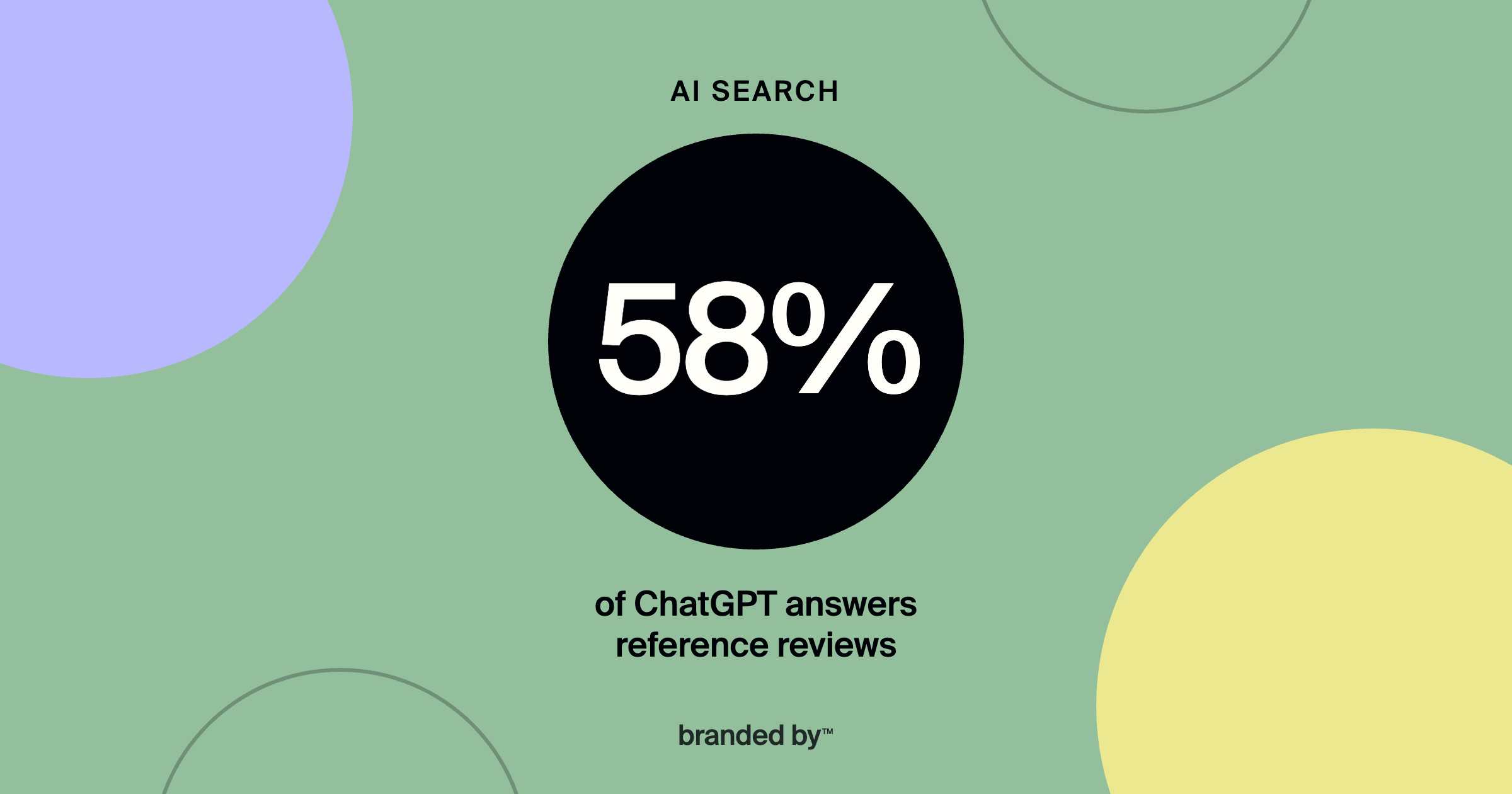
When an AI is asked "who is the best [service] in [location]", it doesn't guess. It looks at review platforms — Google Business Profile, Yelp, industry-specific review sites — and builds a picture of your reputation from what customers have said. The volume of reviews matters. The recency matters. But perhaps most importantly, the content of the reviews matters.
Generic positive reviews — "great service, would recommend" — contribute to overall sentiment but don't provide the specific, attributable language that AI systems find most citable. Reviews that contain specific details about what made the experience good give AI systems extractable content that can be used to characterize your brand.
This is why review generation strategies that prompt customers toward specificity matter more than strategies that just maximize volume. A prompt like "Can you mention the specific project we worked on and what the outcome was?" in a post-project email tends to generate reviews that are far more useful for AI visibility than a generic "Please leave us a review" ask.
Generic reviews
- "Great service, would recommend"
- Adds to overall sentiment only
- Comes from a generic "please leave us a review" ask
Specific reviews
- Details about what made the experience good
- Extractable language AI can use to describe you
- Comes from asking about the specific project and outcome
Community Presence: The Peer Network AI Trusts
Forums, industry communities, Reddit threads, LinkedIn discussions — these are places where peer recommendations carry significant weight for AI systems. When your brand is mentioned by real practitioners in real conversations as a solution to a real problem, that signal is very different from a press mention you arranged or a review you requested.
Organic community presence is harder to engineer but more valuable when it exists. The most sustainable approach is to actually participate: have your team members contribute genuine expertise in communities where your customers spend time. Answer questions. Share real experience. When your brand comes up in a community discussion as a recommendation from someone who used you, that mention contributes to a picture of authenticity and peer validation that AI systems factor into their recommendations.
The Negative Reputation Problem
Just as positive off-site signals improve how AI describes your brand, negative signals can damage it — and the damage can be persistent. If your brand appears frequently in discussions about bad experiences, unfulfilled promises, or industry criticism, AI systems incorporate those associations into their descriptions of you.
The first step in addressing negative off-site signals is honest assessment. Search your brand name in AI tools directly and see how you're described. Then look at the sources being cited. Are there specific platforms — a negative review site, a Reddit thread, a critical blog post — that are consistently shaping the AI's description of you? Identifying the specific sources is the prerequisite to addressing them.
The response strategy depends on the source. For outdated negative reviews, a campaign to generate recent positive reviews on the same platform shifts the recency-weighted sentiment. For a specific piece of critical coverage, earned positive coverage in higher-authority publications can dilute its influence over time.
How to Respond to Negative AI Descriptions
If you search your brand in ChatGPT or Perplexity and find that the AI describes you in ways that are inaccurate, incomplete, or negative, the fix is not to try to directly influence the AI model itself — you can't do that. The fix is to change the underlying sources the AI is reading.
A practical response framework: identify the specific claim in the AI's description that you want to address. Find the source or sources that are generating that claim. Determine whether those sources can be updated (your own website, a directory listing, a Google Business Profile) or countered (by creating better content that ranks above or alongside the negative source). Execute the content or update strategy and monitor the AI's description over the following months.
This process takes longer than traditional reputation management because AI models update their training data on cycles that may be months long. Starting early, and maintaining a consistent off-site presence improvement program, is the sustainable strategy.
Pinpoint the claimIdentify what in the AI's description you want to change.
Find the sourcesTrace which pages are generating that claim.
Update or counterFix sources you control; outrank or dilute the ones you don't.
Monitor for monthsWatch the AI's description as models refresh their data.
Building a Proactive Off-Site Presence
Reactive reputation management — responding to negative signals after they've appeared — is harder and slower than proactive presence building. A proactive off-site presence program has four elements: earned media (pitching stories to relevant publications, contributing expert commentary, creating data-driven content that earns coverage), review generation (systematic post-project outreach that encourages specific, detailed reviews), community participation (genuine engagement in the communities your customers belong to), and directory optimization (ensuring your brand is accurately and consistently represented on the platforms AI systems use as authoritative reference sources).
None of these is a one-time project. Each is an ongoing practice that compounds over time. The brands with the strongest AI visibility in their categories are typically the ones that have been building off-site presence consistently for years, not the ones that executed a single big campaign.
The Entity Consolidation Imperative
All of these signals — PR mentions, brand references, reviews, community presence — only compound into coherent AI authority if they're all attributed to the same entity. This sounds obvious until you audit it.
If your press mentions reference "Acme Marketing," your reviews are for "Acme Marketing Group," and your website says "Acme," AI systems may not confidently attribute all of these signals to a single entity. The authority dilutes across ambiguous references rather than consolidating into a clear picture.
The practical fix: choose a single canonical name for your brand and audit every platform where you appear to ensure consistency. This includes your Google Business Profile, LinkedIn, Crunchbase, industry directories, and the way you're referenced in press coverage.
The Time Horizon for Off-Site AI Reputation Work
Off-site AI reputation management operates on a longer time horizon than most digital marketing activities. A paid campaign produces results in days. A content strategy produces results in weeks to months. An off-site reputation program produces results in months to years — because AI model updates are periodic, because earning genuine coverage and reviews takes time, and because the compounding effect only kicks in after a critical mass of positive signals has accumulated.
This time horizon mismatch is why many businesses underinvest in off-site AI reputation work despite its high long-term value. The right mental model is to think of off-site AI reputation as infrastructure investment rather than campaign spend: the returns are slower, but they're also more durable and harder for competitors to replicate quickly.
How long results take
| Activity | Results show up in |
|---|
| Paid campaign | Days |
| Content strategy | Weeks to months |
| Off-site reputation program | Months to years |
Slower, but more durable and harder for competitors to copy.
Measuring Off-Site AI Visibility
Tracking your off-site AI reputation requires a combination of tools and manual testing. A practical monitoring stack looks like this: Google Alerts for brand mentions, a media monitoring tool for earned press coverage, regular manual testing of AI search tools with the queries your customers most likely use, and quarterly review audits to track volume, recency, and content quality.
The manual AI testing is the most informative. Ask ChatGPT, Perplexity, and Google AI Overviews questions that your customers would ask when evaluating options in your category. See whether your brand comes up, how it's described, and what sources the AI cites. The gap between how AI describes you and how you want to be described is your off-site visibility roadmap.
Want to hear what AI currently says about you? The free AI recommendation check runs the questions your customers ask and sends you the answers in a report.
Frequently Asked Questions
How does AI decide what to say about my brand?
AI tools build their picture of a brand from what they find across the web — news coverage, reviews, forums, directories, and your own site — weighted toward sources they consider credible.
Can I change what ChatGPT says about my company?
Not directly, but you can influence it: correct inaccurate information at the source, earn coverage in credible publications, encourage detailed reviews, and keep your business information consistent everywhere.
Do negative reviews affect AI recommendations?
They can, especially if they reflect a consistent pattern. Responding publicly and fixing the underlying issues matters, because AI tools often summarize overall sentiment.
Related Articles