For most of the last 20 years, the goal was straightforward: rank high on Google, capture clicks, convert visitors. The underlying logic was simple — visibility led to traffic, traffic led to revenue.
That model is being disrupted at the top of the funnel. More and more, the first interaction a potential customer has with your brand category doesn't happen on Google at all. It happens in a conversation with an AI: "What's the best marketing agency for a small B2B company?" or "Who should I use for emergency plumbing repair in Austin?" The AI synthesizes an answer from everything it knows about the web — and either names your brand or doesn't.
This is Generative Engine Optimization (GEO), and the trust signals that drive it are fundamentally different from traditional SEO. Here's what actually matters.
Key takeaways
- The first interaction with your category increasingly happens in an AI conversation, not on Google.
- AI recommends on consensus: when many authoritative sources tie your brand to one attribute, it learns that as fact.
- Original data and specific, outcome-focused reviews give AI something to cite.
- Depth beats breadth: pick your territory and cover it comprehensively.
The Shift From Votes to Vectors
Traditional SEO worked like a democracy. A backlink was a vote. The page with the most votes from the most authoritative sources won. You could work the system by building links strategically, regardless of whether those links represented genuine recommendation.
AI recommendation works on probability and pattern recognition. An LLM predicts the most accurate, helpful answer based on patterns learned across its training data. It doesn't count votes — it looks for consensus. If 50 authoritative sources consistently associate your brand with a specific attribute — reliable enterprise software, best-in-class customer service, the leading expert on a particular topic — the AI learns that association as a fact and reproduces it when the question is relevant.
The implication: you can't engineer this the way you could engineer link building. You have to actually be what you want to be known for, consistently, across many contexts over time.
Traditional SEO
- A backlink is a vote
- The page with the most authoritative votes wins
- Links can be built strategically, genuine or not
AI recommendation
- The model predicts the most accurate, helpful answer
- Consistent consensus across sources wins
- You have to actually be what you want to be known for
Signal 1: Entity Consistency
AI models think in entities, not keywords. Your brand needs to exist as a single, clear, verifiable entity across the web — not as several ambiguous variations that might be the same thing or might not.
This sounds obvious until you audit it. Your website might say "Acme Solutions." LinkedIn says "Acme Inc." Press releases say "The Acme Group." Your Google Business Profile says something slightly different. To an AI system building its knowledge graph, these could be the same company or three different ones.
The fix is unglamorous: unify your name, address, phone number, and brand description across every platform where your business appears. Your website, LinkedIn, Crunchbase, G2, Bloomberg, industry directories, press coverage — every instance should use the same name and the same core positioning language.
The test: ask an AI what your brand does. If it returns a vague or conflicted answer, your entity signal is weak. If it returns your exact positioning, your entity signal is working.
Signal 2: Information Gain
AI systems are hungry for facts they can't find elsewhere. Content that presents genuinely novel information — original research, proprietary data, unique case studies, first-hand expert analysis — earns disproportionate citation weight because it provides something the AI can't synthesize from general knowledge.
This is the content strategy that earns citations most reliably: publish things that are only available from you. A survey of your customers. An analysis of your own results across hundreds of engagements. A framework or methodology that's proprietary to how you work. These become citation magnets because when a user asks an AI about your topic area, the AI has no other source for that specific data.
Generic content — rehashed advice that ten other sites have already published — doesn't earn this kind of citation weight. The AI can synthesize that information from its training data without needing to attribute it to anyone. Information gain requires saying something that can only be attributed to you.
Signal 3: Authoritative Third-Party Mentions
When Forbes, a respected industry trade publication, or a recognized authority in your field mentions your brand in a positive context, you're not just earning a backlink. You're contributing to the consensus picture that AI systems build about who you are.
The weight of these mentions scales with the authority of the source. A mention in a well-regarded industry publication carries more weight than a mention in a minor blog. A mention where you're quoted as an expert on a specific topic carries more weight than a passing reference. A mention that uses specific, descriptive language about your brand's attributes carries more weight than a generic listing.
Strategic media outreach — pitching specific stories to specific publications with specific data — is one of the most reliable ways to build this signal. It's slower than link building and harder to scale, but the trust signal it creates with AI systems is more durable and less gameable.
Signal 4: Review Specificity
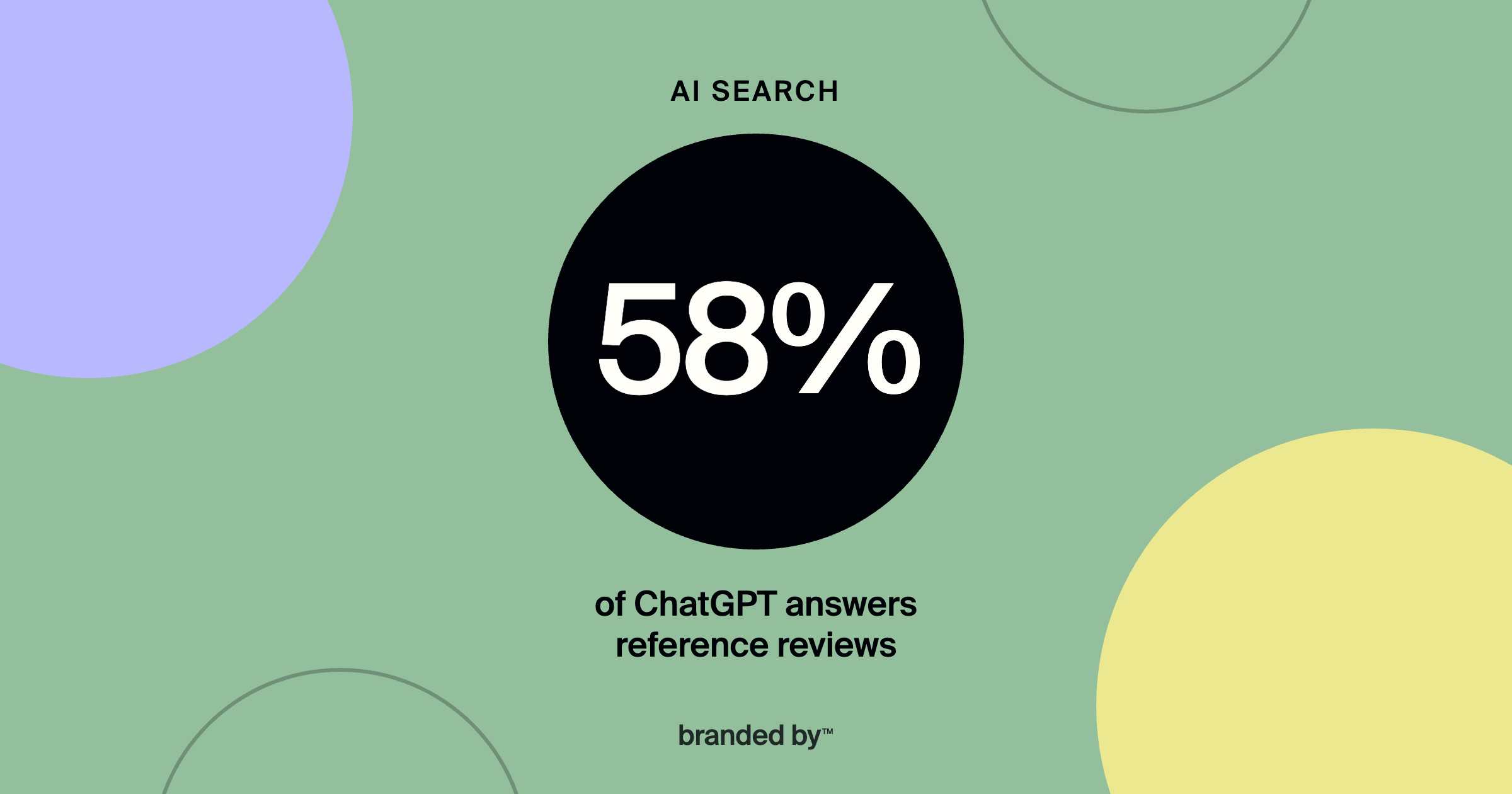
Volume of reviews matters. Recency of reviews matters. But the factor most commonly overlooked is the content of reviews. Generic positive sentiment — "great service, highly recommend" — contributes to overall reputation but doesn't give AI systems anything specific to cite when describing your brand.
Specific, outcome-focused reviews give AI systems extractable claims: "[Company] helped us cut our customer acquisition cost by 35% in three months." "[Firm] handled a complex trademark issue that two other lawyers said wasn't worth pursuing — we won." These specifics are the raw material AI uses to characterize what you do and how well you do it.
Building a review generation process that prompts customers to describe specific outcomes — not just overall satisfaction — compounds in AI recommendation value over time. Ask customers to describe the specific problem, what changed, and how they would quantify the improvement. That narrative structure is exactly what AI systems find most citable.
Signal 5: Consistent Topic Association
AI systems learn associations through repetition. If your brand consistently appears in contexts associated with a specific topic — "AI-powered ad creative" or "local SEO for service businesses" or "fast turnaround brand identity" — the AI learns that association and applies it when the topic comes up in a query.
Building consistent topic association requires discipline across all your content and communication channels. Your website, your social content, your press coverage, your email marketing, your team's LinkedIn posts — all of them should be talking about the same core topics from your brand's perspective. Spreading your content across too many unrelated topics dilutes the signal. Concentrating it around a clear topic cluster builds it.
The brands that AI recommends most consistently are the ones that have built a deep, coherent body of content around a specific topic area over time. Breadth is less valuable than depth. Pick your territory, cover it comprehensively, and let the AI learn that when a question in that territory comes up, your brand is the answer.
The five signals and how to build them
| Signal | What to do |
|---|
| Entity consistency | Use the same name, contact details and positioning on every platform |
| Information gain | Publish original research, proprietary data and first-hand analysis |
| Third-party mentions | Pitch specific stories with specific data to authoritative publications |
| Review specificity | Ask customers for the problem, what changed and how they'd quantify it |
| Topic association | Pick your territory and cover it in depth across every channel |
Want to see how these signals are landing for your brand right now? The free AI recommendation check runs the questions your customers ask and sends you a report.
Frequently Asked Questions
What are brand trust signals for AI?
They're the cues AI engines use to decide whether a brand is credible enough to recommend: consistent business information across the web, original data, mentions in authoritative third-party sources, specific reviews, and a clear, consistent topic focus.
Can I pay to be recommended by ChatGPT?
ChatGPT has started selling ads, but ads are labeled and separate from its organic recommendations. Organic recommendations still depend on the trust signals in this article. We cover both paths in Will AI Recommend Your Brand?.
How long does it take for AI to start recommending a brand?
Expect months, not weeks. Fixing entity consistency and on-site answers can show results relatively quickly, but third-party mentions and review volume build over time.
Related Articles